Nethili Karuvadu Cooking Guide: Fry, Kuzhambu and Thokku
Learn how to prepare Nethili karuvadu for fry, kuzhambu, and thokku, with tips for salt, crispness, gentle cooking, and meal pairings.
14 min read
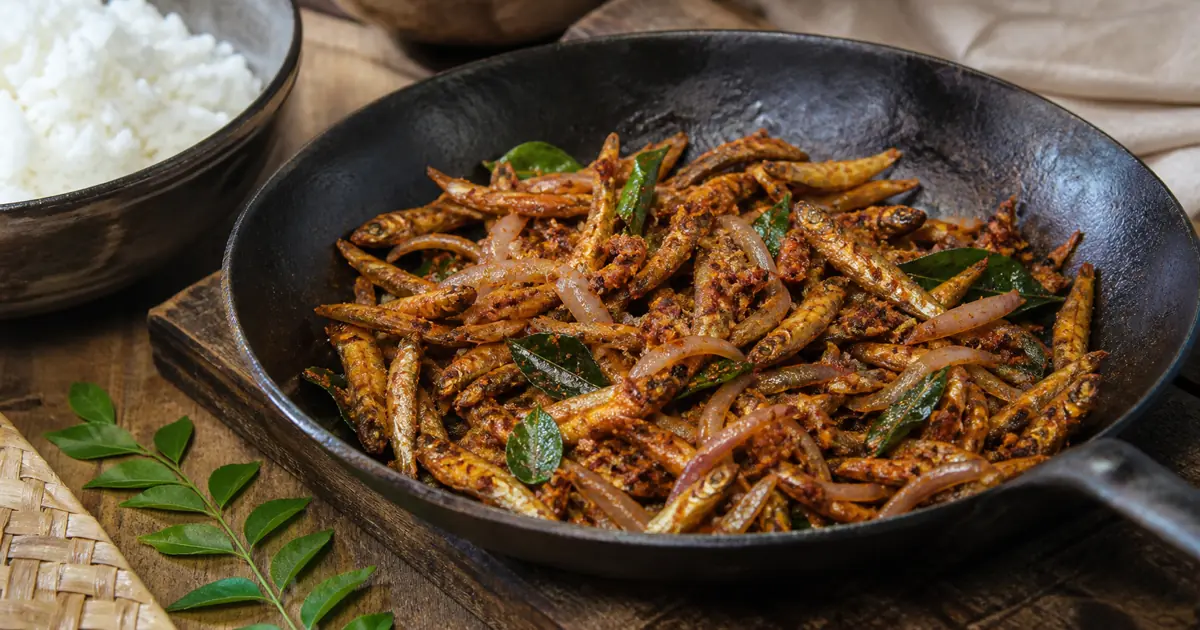
Choose your Nethili dish before you start cleaning
Nethili karuvadu is a useful starting point for learning dry fish cooking because a small quantity can flavour a whole meal. The best method depends on the result you want. For a crisp accompaniment to rice and rasam, choose a fry. For a tamarind gravy that carries flavour through the rice, choose kuzhambu. For a thick onion and tomato preparation that can be served in smaller portions, choose thokku. These dishes use overlapping ingredients, but the preparation after cleaning differs. A fry benefits from carefully drained fish, whereas a gravy needs enough liquid and gentle cooking to keep its pieces intact.
Before opening the packet, decide how many people will eat and which other dishes you are serving. Dry fish usually works well as one component of a meal rather than the only substantial item on the plate. Set out the pan, a bowl for washing, a strainer, and any vegetables or spices first. This avoids leaving wet fish on the counter while you search for ingredients. Read the supplier's instructions too: Nethili batches can differ in size, dryness, and salt level. The following guide explains decisions and common problems, while the linked recipe pages provide the specific ingredient quantities for each dish.
Identify what is in your packet
Nethili is commonly sold as a small whole dry fish, and the packet may still need sorting before cooking. Spread a modest portion onto a clean tray so you can see the pieces. Look for loose fragments, visible foreign matter, and any parts you normally remove according to the product instructions and your household's preference. Keep the unused dry portion separate from the washing area. Do not empty the whole packet into water if you plan to cook only a small amount. Once the product is wet, its handling needs change, and returning washed fish to the original dry packet is a poor storage habit.
Tiny fish can break if handled aggressively, especially when dry and brittle. Work with small handfuls rather than crushing the entire portion while sorting. Some cooks remove heads and other parts; the appropriate approach depends on the supplied product and the intended dish. Small bones may remain even after careful cleaning, so do not describe a whole-fish preparation as boneless. If you are serving someone who has difficulty managing bones, choose and prepare a suitable alternative. Knowing what the packet actually contains is more helpful than assuming every product labelled Nethili is cleaned, trimmed, and ready for exactly the same method.
Rinse thoughtfully and decide whether soaking is needed
A rinse helps remove loose surface salt and grit, but there is no single soaking rule for every packet. Follow the product's guidance, and use clean water and a clean bowl. If the fish is already delicate and the instructions call for only a brief rinse, avoid leaving it in water while you complete the rest of your preparation. If a saltier batch needs additional treatment, use a controlled process and drain it afterwards. The purpose is to prepare a sound product for cooking, not to rescue a packet that has mould, insects, or other signs of a quality problem.
Longer soaking can soften small fish and change its texture, which may work against a crisp fry. Conversely, skipping necessary preparation can leave unwanted salt or grit. Learn from the first small batch and make a note rather than treating a fixed time as universal. Never taste raw dry fish or its soaking water to judge seasoning. Assess salt after the fish is fully cooked in the dish. If you need to pause after washing, keep the prepared fish refrigerated rather than leaving it out while you run errands. Wet preparation should be part of the cooking session, with suitable cold storage whenever there is a delay.
Drain well when crispness is the goal
For Nethili fry, excess surface water is one of the most common obstacles to a good texture. After rinsing, let the fish drain thoroughly in a clean strainer and gently remove remaining surface moisture with suitable clean kitchen paper if needed. Do not rub the fish so hard that the pieces collapse. Meanwhile, prepare the onion and curry leaves, and measure the spices separately. A wet bowl of fish mixed with a large amount of powder can form a thick paste that sticks to the pan. The aim is an even, light coating rather than a heavy shell that hides the fish.
Keep the draining and coating stages close to cooking time. You do not need to leave the prepared fish uncovered for hours to make it dry enough to fry. Drying on the countertop is not a substitute for appropriate food handling. Use a pan with enough space for a shallow, even layer, and have a plate ready for the cooked batches. If the cleaned amount is too large for one layer, split it before you start. That simple decision improves consistency because every piece encounters the pan rather than sitting in a pile where trapped steam keeps the centre soft and delays cooking.
Balance the spice coating without adding unnecessary salt
Chilli powder, turmeric, and coriander can provide a straightforward starting flavour for Nethili fry. Use the quantities in the linked recipe as a baseline and adjust chilli to your family's preference. Mix the powders evenly before coating the fish so that one handful does not receive all the chilli. The existing salt in the fish may be enough for the finished dish, so avoid automatically adding salt with the spice powders. A little oil can help distribute a dry coating, but adding too much liquid to the bowl can undo the careful draining that supports browning in the pan.
If you want to compare spice combinations, change one element at a time. For example, try a slightly lower chilli quantity in the next batch while keeping the fish amount and pan method the same. This gives you a clear understanding of the effect. Several simultaneous changes make it hard to know why a dish became bitter, too hot, or soft. Keep acidic finishing ingredients, such as a small squeeze of lemon if you use it, for the serving stage when suitable. Pouring additional liquid over a finished crisp fry before it reaches the table can soften the texture you worked to create.
Manage pan heat and space for a better fry
Heat control matters because the thin spice coating can burn before you have achieved the texture you want. Follow the recipe's medium-heat approach and watch the behaviour of the food rather than relying on the stove knob alone. A heavy pan retains heat differently from a light one, and a small burner heats differently from a wide burner. Add the fish in a manageable layer. If the oil spits heavily, check whether excess water remained on the fish; if the spices darken rapidly, reduce the heat. Neither problem is solved by adding a larger pile of fish to the same pan.
Give the pieces time to set before turning them gently. Constant stirring can break the fish and move the coating into the oil, producing fragments instead of a fry. If using onion, remember that onion releases moisture and can crowd the pan. Follow the sequence in the recipe so the onion softens at the appropriate stage. Work in batches when needed, allowing the pan to recover between them. The finishing appearance should come from controlled cooking, not charring. Crispness is a texture goal rather than a safety test, so make sure the fish is cooked through rather than stopping as soon as the outside looks dark.
Build a kuzhambu base before adding the fish
For Nethili kuzhambu, the gravy deserves attention before the fish enters the pot. Prepare the onion, garlic, tomato, tamarind, and any recipe vegetables in advance. Cook the aromatics and spices according to the recipe so that the base develops its flavour without needing the small fish to withstand long stirring. Tamarind strength varies with the amount used and how concentrated the extract is. Begin with the specified quantity, keep additional water available, and avoid assuming that a darker extract is automatically better. A well-balanced gravy should support the fish rather than overwhelm it with sharp acidity.
Add the prepared Nethili at the recipe's indicated stage and simmer gently. Small pieces can break in a vigorous boil, particularly if they softened during washing. Stir only as needed, or gently move the pot when practical to distribute the gravy. Allow time for the fish to cook and its salt to reach the sauce before deciding on additional seasoning. If you add salt early because the tomato base tastes bland, the completed gravy may become too salty once the fish is included. A calmer sequence gives you more control: build the base, add fish, cook, then assess the final balance.
Make thokku thick through reduction, not constant stirring
Nethili thokku uses a concentrated base rather than the flowing gravy of kuzhambu. Onion and tomato need enough cooking to lose their raw texture and form a coherent mixture before the fish is added. This is why thokku is not simply a fry with extra tomato thrown into the same crowded pan. Start with the linked recipe's amounts and allow the base to reduce steadily. If you rush the reduction, the fish may end up sitting in a watery sauce; if you scorch the base, bitterness can dominate every bite even when the fish itself is well prepared.
Once the fish is in the pan, reduce the mixture with care and avoid scraping aggressively through the pieces. Watch for thickening at the edges and stir gently enough to prevent sticking. The finished thokku should be spoonable and moist rather than burnt dry. A visible sheen of oil may occur, but it does not make the food suitable for prolonged storage at room temperature. Treat the cooked dish as a perishable food. Serve what you need, cool and refrigerate leftovers promptly, and use safe reheating practices. A thick preparation can be convenient without being turned into an unverified homemade shelf-stable preserve.
Choose accompaniments that make the meal balanced
A strongly flavoured Nethili dish benefits from gentler companions. Plain rice provides a neutral base, while a vegetable poriyal or another simple vegetable dish adds contrast in texture and flavour. With a fry, rasam can supply a lighter liquid component. With kuzhambu, a separate salty gravy may be unnecessary. With thokku, begin with a modest spoonful and allow diners to add more according to preference. These serving choices are practical ways to enjoy the fish without making every item on the plate compete for the strongest spice or salt level.
Think about the complete meal when seasoning. If the fish is already salty, heavily salted rice, pickle, and another concentrated condiment can make the overall plate excessive even when each item seems acceptable alone. Keep accompaniments lightly seasoned and let the main dish carry the flavour. Do not assume that a small-fish dish automatically suits every diner: fish allergies and difficulty managing bones require individual attention. For children or anyone who needs help with bones, inspect portions carefully and choose an appropriate alternative if necessary. The goal is a comfortable meal with recognisable flavours, not a challenge to eat every part of a whole fish.
Troubleshoot salty, soft, bitter, and broken results
If a finished fry is too salty, adding more chilli will not remove the salt. Serve a smaller quantity with unsalted or lightly seasoned accompaniments, and adjust the preparation of the next batch. For a gravy that is salty, expanding the unsalted base can help reduce the concentration, provided you preserve the intended consistency. Avoid adding a potato and expecting it to selectively remove all the salt. A soft fry often points to excess water or overcrowding, so check draining and batch size first. Making the heat much higher can burn the outside without resolving the underlying problem.
Bitterness may come from burnt spices or a scorched base. Once a dish is badly burnt, adding more tomato cannot reliably restore the flavour. Reduce the heat earlier next time and prepare the ingredients before heating the pan. Broken fish may reflect prolonged soaking, vigorous boiling, or repeated stirring. Try a gentler handling sequence with the next sound batch. Keep these cooking faults separate from signs that the uncooked product was unsuitable. Texture adjustments are useful for an otherwise sound ingredient; mould, insect activity, and suspected spoilage need rejection and supplier follow-up rather than a recipe repair.
Handle leftovers and repeat meals safely
Plan leftovers before you start, especially if you are cooking more than your family will eat. Use clean serving utensils and keep the remaining dish separate from used plates. Divide a large quantity into smaller suitable containers so that it can cool and enter the refrigerator promptly. FDA guidance for perishable food advises refrigeration within two hours, or within one hour when temperatures exceed about thirty-two degrees Celsius. These limits concern prepared fish and other perishables; they are not a generic storage duration for every unopened dry fish packet. Follow the packet directions for the dry ingredient and appropriate cold handling for the cooked meal.
Reheat only the portion you intend to eat, making sure it becomes thoroughly hot throughout. A thick thokku can heat unevenly if only its surface is warmed, while a gravy needs stirring to distribute heat. Store the dry packet and the cooked leftovers separately, and label the cooked container so nobody mistakes it for a newly prepared meal. If you are uncertain how long a dish has been left out or how it was stored, do not rely on an acceptable smell as proof of safety. Good planning means the convenience of leftovers does not depend on repeated warming, cooling, and guessing.
Frequently asked questions and your next recipe
Does Nethili always need a long soak? No; the batch and supplier directions matter, and excessive soaking can damage a delicate texture. Can you use the same preparation for fry and kuzhambu? The sorting and washing may overlap, but a fry needs particular attention to surface moisture, while a gravy needs a suitable base and gentle simmer. Should you add salt at the beginning? It is usually more controllable to wait until the fish has cooked and the whole dish can be assessed. Can whole Nethili be described as boneless? No; small bones may remain and diners need to handle them appropriately.
What is the easiest dish to begin with? Choose the one you already enjoy eating and follow its linked recipe closely. Familiarity helps you recognise the intended texture and seasoning. For a second attempt, change only the step that caused difficulty: draining for a soft fry, heat for burnt spices, or timing for broken pieces in gravy. Keep a short note about the packet and method. With that approach, Nethili cooking becomes a series of understandable decisions rather than a search for one universal rule. The recipe links below take you directly to measured versions of fry, kuzhambu, and thokku so you can put those decisions into practice.
A useful comparison cook for a second packet
If you want to understand how preparation affects your fry, keep the recipe and pan consistent on your next cook. Use the same measured fish amount and spice quantities, then improve only the draining or batch size that caused difficulty before. Note the result immediately after serving, since a fry's texture changes as it waits. This kind of simple comparison is more informative than switching several ingredients at once. It also lets you recognise a genuine difference between packets without assuming that every change came from the variety itself.
For a gravy comparison, keep the tamarind amount and water measure steady while improving the point at which you add the fish. Observe whether the pieces remain more intact and whether the final seasoning still needs adjustment. Do not make several extra dishes solely for comparison; use your normal meals and record a few observations. Your goal is a repeatable family dish, not an elaborate experiment. Once a method works, save the note with the recipe so another person in the household can reproduce the same sequence. Shared practical instructions are particularly helpful when more than one person cooks from the same packet.