Fish Names in Tamil and English: Sea Fish Name List
Sardine is Soodai, mackerel is Ayilai, seer fish is Vanjaram, squid is Kanava and prawn is Eral. Find common sea fish names in Tamil and English, grouped by type.
By Thenkadal Karuvadu · 7 min read
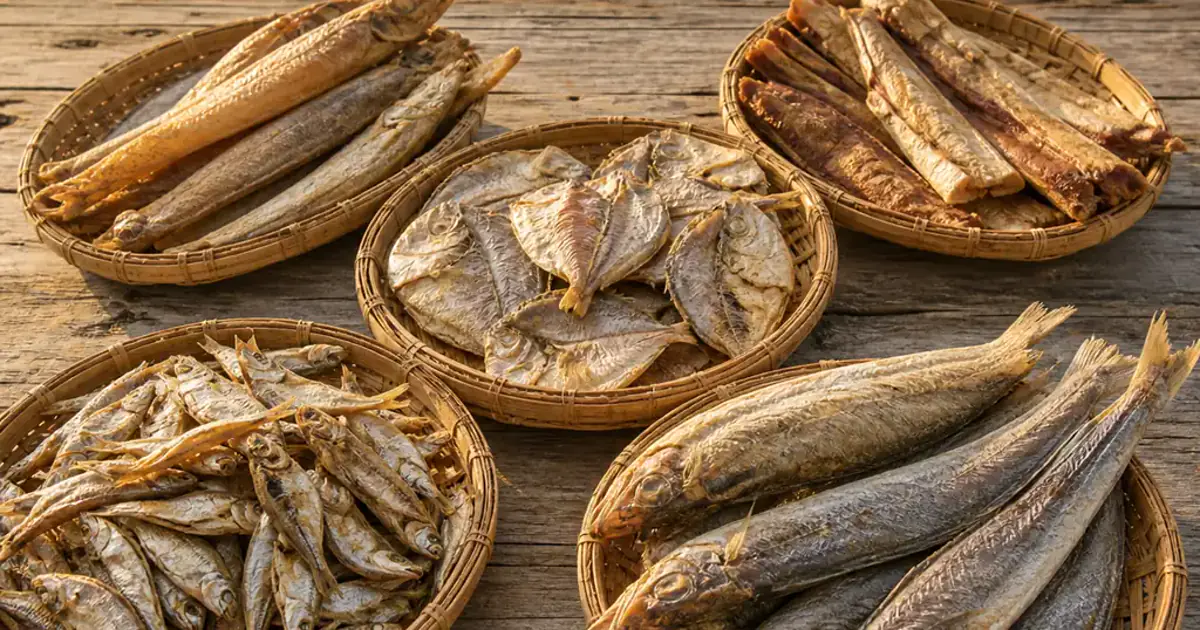
The Most Searched Fish Names in Tamil
If you only need a quick answer, here are the fish people ask about most:
Sardine: Soodai (சூடை) for small sardines, Chaalai (சாளை) or Mathi (மத்தி) for the larger oil sardine.
Mackerel: Ayilai (அயிலை).
Prawn: Eral (இறால்), also spelled Era.
Seer fish: Vanjaram (வஞ்சிரம்), also called Nei Meen (நெய் மீன்).
Squid: Kanava (கணவாய்).
Anchovy: Nethili (நெத்திலி).
Herring: Vengana (வெங்கணை).
Read on for the full list, grouped by type, with a short note on what each fish is like and how it is usually cooked.
How to Use This List
Find the English name you know, and the Tamil name follows it. Fish of a similar size and type are grouped together, so you can compare them.
Tamil fish names change from one coastal district to the next, and one fish can have two or three local names. The names here are the ones used on the Rameshwaram coast, where Thenkadal Karuvadu's fish is landed and dried. If your family uses a different name, it may well be right too.
Spellings also vary, because Tamil names are written in English letters in different ways. Vaalai, Valai and Vala are the same fish. So are Seela and Sheela. Where it helps, the name is also given in Tamil script, which is the same however it is written in English.
Small Sea Fish
Anchovy: Nethili (நெத்திலி). Small and silver, and one of the best-known fish in a Tamil kitchen. In Kerala the same fish is called Netholi. The fine bones soften once fried, so most people eat it whole. Nethili fry, kuzhambu and thokku are all everyday dishes.
Sardine: Soodai (சூடை), Chaalai (சாளை) or Mathi (மத்தி). All three are sardines. Soodai is the name used for the smaller sardines, while Chaalai, also called Mathi, is the larger oil sardine. Soodai has an intense coastal flavour and is thin enough to fry crisp, with bones that soften as they cook.
Herring: Vengana (வெங்கணை), also spelled Venganai. A richer, oilier small fish with a distinctive flavour. It has many fine bones, but they soften well once cooked through.
Ponyfish: Karal (காரல்), also spelled Kaaral. Many people call it silver belly fish. A humble everyday fish, best known on the Rameshwaram coast for Karal rasam.
Threadfin: Thondan (தொண்டான்). A slender, savoury fish that turns crunchy when fried, good as a side for variety rice.
Medium and Large Sea Fish
Indian mackerel: Ayilai (அயிலை). A familiar fish with a fuller, richer flavour, well suited to strong spicing in a fry, kuzhambu or thokku.
Seer fish: Vanjaram (வஞ்சிரம்), also called Nei Meen (நெய் மீன்). Thick, meaty steaks with very few bones. It is often called the king of dry fish, and it is the one people cook for guests.
Trevally: Paarai (பாறை). A firmer, slightly oily fish that holds its shape well in gravy.
Milk trevally: Kuthippu (குதிப்பு). A lean white fish with a clean, mild taste, for anyone who prefers a less fishy flavour.
Barracuda: Seela (சீலா), also spelled Sheela. Firm, white flesh and a bold flavour. It holds together well in kuzhambu or fry.
Red snapper: Sankara (சங்கரா). A delicate, naturally sweet fish that cooks quickly. A good choice if you are new to dried fish.
Emperor fish: Vilai Meen (விளை மீன்). An everyday fish with a naturally sweet edge, good for fry and kuzhambu.
Croaker: Panna (பண்ணா). Soft, mild flesh that takes on the flavour of whatever it is cooked in. It is sometimes sold as cod, but true cod is a cold-water fish that is not caught in Indian waters.
Red mullet: Nagarai (நகரை). Known for its pinkish colour and a gentler flavour than most fish.
Flying fish: Kola (கோலா). Firm flesh that keeps its shape in a spicy kuzhambu.
Ribbon fish: Vaalai (வாளை), also spelled Valai or Vala. Long and silvery, with a single central bone that is easy to remove.
Tuna: Soorai (சூரை). Skipjack tuna, salted and sun-dried, is sold as Maasi (மாசி), also known as Maldive fish. It is dense and smoky, and is shaved or crumbled into sambal and poriyal.
Sharks, Rays, Squid and Prawns
Shark: Sura (சுறா). Milk shark, the kind most often sold dried, is Paal Sura (பால் சுறா). It is firm and meaty, with soft cartilage instead of fine bones, so it is easy to eat. Shark is best avoided during pregnancy and breastfeeding because it can carry mercury.
Stingray: Thirukai (திருக்கை), also spelled Thirukkai. Firm and savoury, with cartilage instead of fine bones, which many people find easier to eat around.
Squid: Kanava (கணவாய்). Squid is not really a fish, but on the Tamil coast it is sold, dried and cooked alongside fish. It has no bones and a chewy texture.
Prawn: Eral (இறால்), also spelled Era. Dried prawns are boneless, with just a light, edible shell. A small amount adds a lot of savoury flavour to thokku, chutney and curry.
Freshwater Fish
Not every fish in a Tamil kitchen comes from the sea. Two freshwater fish are also commonly dried:
Catla: Kathalai (கத்தலை). A soft, flaky river and pond fish with a milder, rich flavour that suits a simple curry.
Indian spiny loach: Ayirai (அயிரை), also called Ayira Meen. A small fish, usually cooked whole. It has fine bones, so check it before serving to children.
Which Fish for Which Dish
If you know the dish you want to cook, this is a quick way to choose a fish.
For a crisp fry: Nethili (anchovy), Soodai (sardine), Sankara (red snapper), Vilai Meen (emperor fish), Thondan (threadfin) and Ayilai (mackerel).
For kuzhambu, the tamarind gravy: Paarai (trevally), Panna (croaker), Kola (flying fish), Seela (barracuda) and Thirukai (stingray). Their firmer flesh holds its shape in the gravy.
For thokku, the thick masala: Vanjaram (seer fish), Paal Sura (milk shark), Panna (croaker) and Eral (prawn).
For rasam: Karal (ponyfish), a Rameshwaram speciality.
For sambal and poriyal: Maasi (dried skipjack tuna), shaved or crumbled in small amounts.
A Few Tamil Words That Help
Meen (மீன்) means fish. That is why some names end in it, such as Vilai Meen and Nei Meen.
Karuvadu (கருவாடு) means salted, sun-dried fish. Nethili Karuvadu is dried anchovies.
Paal (பால்) means milk. Paal Sura is milk shark.
Eral (இறால்) means prawn, and it is used for both prawns and shrimp.
Names People Often Mix Up
Soorai (சூரை) and Sura (சுறா) sound alike but are different fish. Soorai is tuna; Sura is shark.
Nagarai is red mullet, not croaker. Croaker is Panna.
Soodai and Chaalai are both sardines, but Soodai is the smaller one.
Vanjaram and Nei Meen are two names for the same fish, seer fish.
Maasi and Masi are two spellings of the same thing: dried skipjack tuna.
Panna is sometimes sold as cod, but it is croaker. True cod does not live in Indian waters.
Which Fish Has the Fewest Bones?
If bones are a concern, especially when cooking for children or older relatives, these are the easiest choices:
No bones at all: Kanava (squid) and Eral (prawn).
Cartilage instead of fine bones: Paal Sura (milk shark) and Thirukai (stingray).
Very few bones: Vanjaram (seer fish) and Vaalai (ribbon fish), which has a single central bone.
Small fish such as Nethili, Soodai and Vengana do have fine bones, but they soften during cooking and are usually eaten.
From Fresh Fish to Karuvadu
Karuvadu is the Tamil word for salted, sun-dried fish. To name the dried form of any fish, add karuvadu to its Tamil name. Nethili becomes Nethili Karuvadu, dried anchovies. Kanava becomes Kanava Karuvadu, dried squid.
Each Thenkadal Karuvadu product page shows both the Tamil and English names, along with the texture, bones, best cooking uses and current price for that fish.