Karal Meen Karuvadu: The Coastal Fish Behind Rameshwaram’s Rasam
Discover Karal meen, the small coastal fish used in Rameshwaram kitchens, and why its rasam carries a story about affordability, fishing livelihoods and food memory.
8 min read
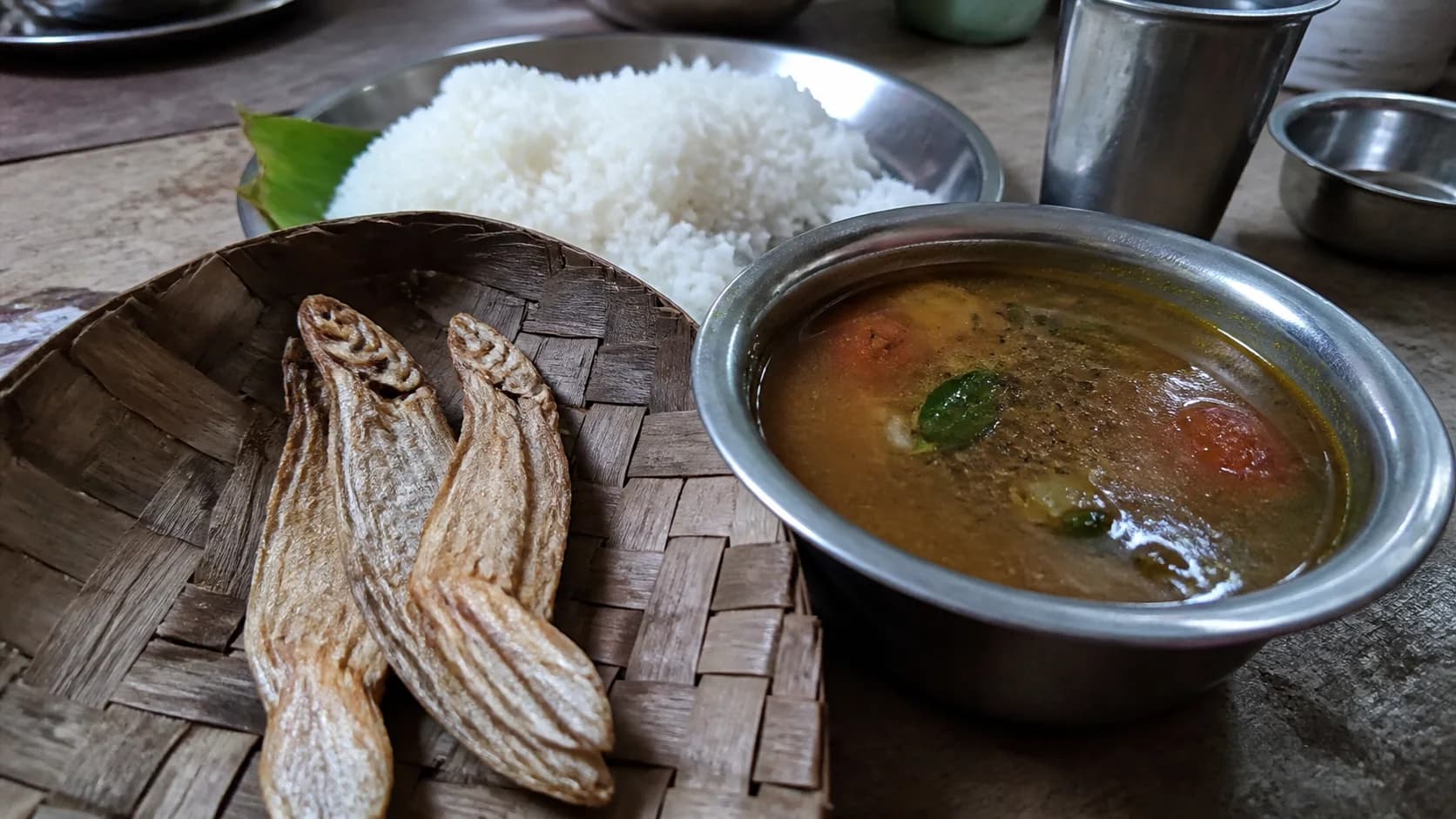
A Small Fish with a Big Place in the Kitchen
Karal meen, also called Podi meen in some coastal communities, is a small ponyfish traditionally sold fresh or salted and sun-dried. It is not the kind of fish that usually appears in a restaurant menu. It belongs to the everyday kitchen: a modest ingredient bought in a small quantity and stretched into a deeply flavoured meal.
In Rameshwaram, Karal karuvadu is valued for the flavour it gives to rasam. Tamarind, tomato, pepper, garlic and curry leaves create a light, sharp broth, while a little dried fish gives it the savoury depth that makes a simple plate of rice feel complete.
What Makes Karal Karuvadu Different?
Karal is generally a small, flat-bodied fish. Once cleaned, salted and dried, it becomes firm, aromatic and easy to keep. The texture is different from a thick meaty fish: it releases flavour quickly, which is why it works so well in rasam, thin gravies and small side dishes.
Like every karuvadu, the finished character depends on more than the fish name. The catch, cleaning, salt, sunlight, drying time and storage all matter. A properly dried piece should feel firm and dry rather than damp, sticky or unusually soft.
From Landing Centre to Local Market
Karal is also part of a much larger seafood economy. Field reporting from Rameshwaram has described how mixed trawl catches can be diverted in bulk to fishmeal and fish-oil processing instead of being sold through local channels. That does not mean every Karal fish follows the same route, but it does show how industrial demand can influence what reaches a household market.
For local families, the effect is felt in ordinary ways: a once-accessible fish may be harder to find, prices may change with the season, and familiar recipes may need to be made with less fish or replaced by a more expensive variety. These are food-system changes, but they are experienced at the cooking pot.
Why Affordable Fish Matters
Affordable fish is not only about price. Small varieties help families add protein and flavour to meals without buying a large, premium fish. Dried fish can be used in small portions, stored carefully and combined with tamarind, greens, rice and other everyday ingredients.
When an inexpensive local fish becomes less available, the loss is nutritional as well as cultural. A recipe such as Karal karuvadu rasam carries knowledge about how to cook with what the coast provides, how to make a little go further and how to feed a household through leaner seasons.
The Hidden Journey of a Small Fish
A fish seen in a local market may have travelled through several different value chains before it reaches a kitchen. At the landing centre, catches are sorted by species, size, freshness and the buyer who can take them. Some fish move to retail stalls, some are bought by small traders for drying, and some mixed catches are sold in bulk for industrial processing.
Fishmeal and fish oil are used in aquaculture feed, poultry feed, pet food and other products. The demand is not visible on a household plate, but it can influence the price offered at the shore. When a bulk buyer can take a large mixed load quickly, a small trader or fisherwoman may find it harder to compete for the same fish one basket at a time.
This is why a discussion about Karal meen is also a discussion about who gets access to coastal food. The question is not simply whether the fish is abundant in the sea. It is whether enough of it remains in a form and at a price that local households can use.
Bycatch Is Not the Same as Waste
The word bycatch can make a fish sound unwanted, but a fish that has little value in one industrial chain may be important food in another. Ponyfish, small terapontids and other mixed species can be cooked fresh, salted for later, dried by local traders or shared through neighbourhood markets.
When immature or mixed fish are landed together, sorting becomes difficult and time-sensitive. Selling the whole lot to a bulk buyer may be the most practical option for a boat owner facing fuel costs, ice costs and a narrow window before the catch loses quality. The decision is understandable from the point of view of the boat, but it can still reduce the variety available to local cooks.
A healthier seafood system has to consider both ecological pressure and food access. Better landing-centre transparency, support for small-scale traders, careful handling and fair local markets can help keep edible fish connected to the communities that have long known how to use it.
The Women Who Keep Dry-Fish Markets Moving
Dry-fish markets are not only places where a product is sold. They are working networks of cleaning, salting, drying, sorting, bargaining and carrying. Fisherwomen and small traders often make the decisions that turn a fluctuating catch into an ingredient that can be stored and sold over time.
The work is physically demanding and highly dependent on weather. Fish must be cleaned quickly, spread at the right density, protected from animals and insects, turned or moved as conditions change, and packed before humidity affects the final texture. A small loss in drying can erase the margin on a low-priced fish.
When the local supply of Karal becomes uncertain, the impact is felt by these workers as well as by buyers. Less access to the catch means fewer baskets to process, more competition for raw material and a greater risk that a traditional product becomes too expensive for everyday customers.
What Karal Meen Contributes to a Meal
Karal karuvadu is valued for intensity rather than size. A few cleaned pieces can season a pot of rasam, a tamarind gravy or a vegetable preparation. The fish is usually one part of the meal, served with rice, greens or another side rather than treated as a large centrepiece.
Dried fish is naturally concentrated because water has been removed, and its nutritional profile varies by species, portion and recipe. It can contribute protein and minerals, but it is also salt-cured. Rinsing, using a modest quantity and tasting before adding salt are practical ways to keep the dish balanced.
For households managing sodium intake, portion size matters. The right way to enjoy a traditional ingredient is not to make broad health claims, but to understand how it was preserved and fit it sensibly into the rest of the meal.
How a Rasam Carries Place
Recipes move with people. A cook may learn a preparation from a mother-in-law, a neighbour, a market seller or a colleague, then adjust it to the ingredients available in a different town. The result is not a fixed museum recipe; it is a living method that changes while keeping its central flavour logic.
Karal rasam follows that logic. Sour tamarind gives the broth lift, tomato adds body, pepper and garlic bring warmth, and curry leaves add a fresh, familiar fragrance. The dried fish is used with restraint because its job is to deepen the broth, not overpower every other ingredient.
That adaptability is one reason small fish matter. A recipe can travel beyond the coast, but it still carries the memory of where the ingredient came from and why people first learned to cook it that way.
Buying and Cooking Karal Karuvadu Carefully
When buying dried Karal, look for a product that is properly dry, cleanly handled and packed against humidity. Natural variation in colour and size is expected. Avoid fish that feels wet or sticky, has visible mould, or smells sour and rotten rather than cleanly salty and marine.
At home, rinse away surface salt and loose particles, then drain thoroughly. A short soak may be useful for a thicker or heavily salted batch, but small fish can lose their character if left in water for too long. Cook a small piece first and adjust the recipe only after tasting it.
Store the unused portion in an airtight container, away from steam and strong food smells. Refrigeration is useful in warm, humid conditions. Good storage protects not just the product but the work that went into cleaning, salting and drying it.
A Simple Karal Karuvadu Rasam Method
Rinse the dried fish thoroughly and remove any unwanted hard portions. Use a small amount of tamarind water with crushed garlic, tomato, pepper, cumin, chilli and curry leaves. Simmer the base first, add the fish near the end, and cook only until the broth takes on its savoury flavour.
Taste before adding salt. Karuvadu is already cured, and the right amount depends on how it was salted and how thoroughly it was rinsed. Serve the rasam hot with rice, keerai or a simple vegetable side.
Keeping the Tradition Alive
A recipe does not survive only because it is written down. It survives when someone still knows which fish to buy, how much to rinse, when to add it to the pot and how to balance its salt with tamarind and pepper. That practical knowledge is part of Rameshwaram’s coastal food culture.
Karal meen reminds us that dry fish is not a single category with one flavour. Each variety has a place, a season, a price and a set of kitchen uses. Explore the wider Karuvadu guide and variety hub to understand those differences before choosing a pack.
This article’s discussion of fishmeal and fish-oil diversion is informed by field reporting from The Locavore. Read the original reporting in The Slow Disappearance of Karal Meen from Rameshwaram’s Fish Markets.
Read the complete Karuvadu guide →