Blog category
Preparation & Storage
Clean, soak, de-salt and store karuvadu with confidence.
Good karuvadu starts before it reaches the pan. Rinsing and soaking removes surface salt and grit, and how long you soak depends on the size of the fish and how salty you like the dish. Thin fish need only a few minutes, while thick cuts may need longer and a change of water.
Storage matters just as much. Dry fish picks up moisture quickly, especially in humid weather, so an airtight container kept in a cool, dry place helps it last. These articles cover cleaning, soaking, de-salting and storing karuvadu, and how to tell when a pack has gone past its best.
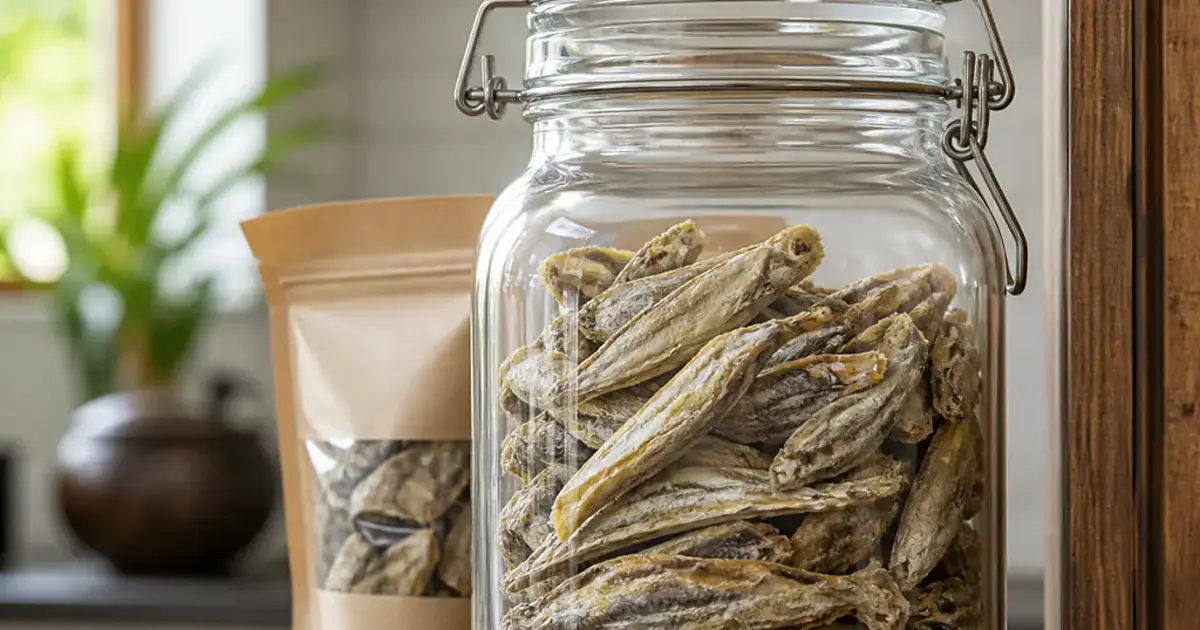
Karuvadu in Humid Weather: Dry Fish Handling and Storage
Protect karuvadu in humid weather with practical guidance on delivery checks, dry containers, portioning, wet preparation, and storage instructions.
Read ArticleHow to Store Dry Fish: Airtight, Fridge or Freezer
Can you keep dry fish in the fridge? Yes, for longer storage. How to store karuvadu at home, when to refrigerate or freeze it, and the signs it has gone bad.
Read Article