Karuvadu in Humid Weather: Dry Fish Handling and Storage
Protect karuvadu in humid weather with practical guidance on delivery checks, dry containers, portioning, wet preparation, and storage instructions.
14 min read
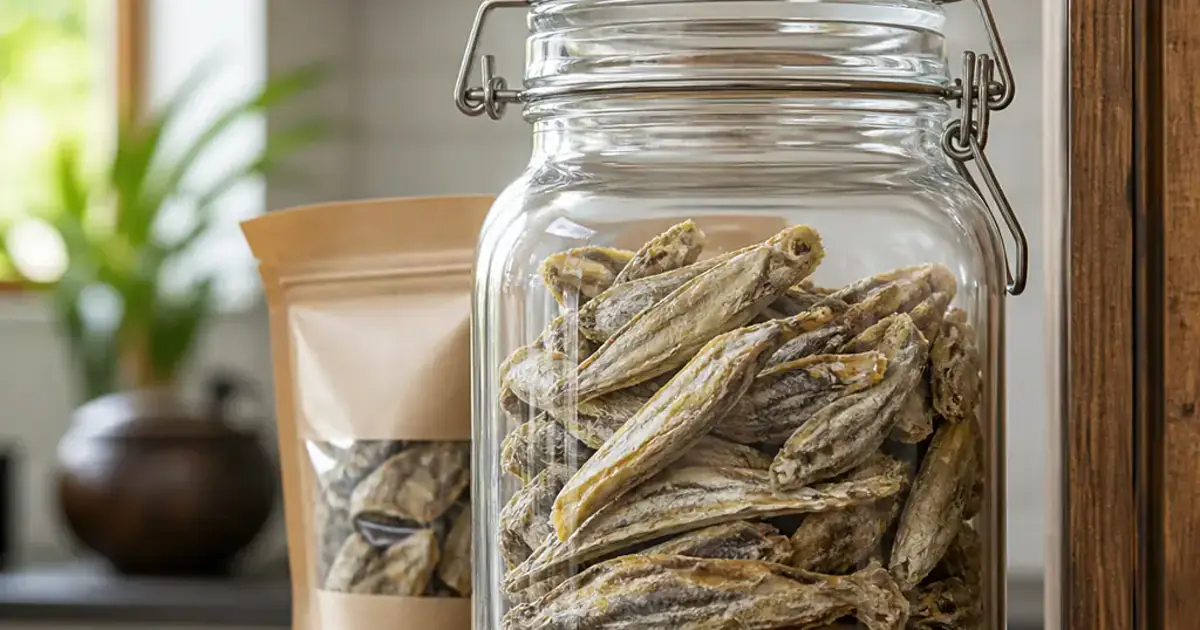
Humid weather changes the way you handle a packet
Karuvadu has been dried, but that does not mean it can be treated carelessly in a damp kitchen. Humid air, steam from cooking, wet utensils, and a poorly closed packet can all make household handling more difficult. The useful question is not how many months every kind of dry fish will last in every home. It is how to protect the specific product you bought and follow the storage instructions that came with it. A consistent routine becomes especially helpful during rainy periods, when shelves, containers, and hands may be exposed to more moisture than you realise.
Start by reading the label before deciding between cupboard, refrigerator, and freezer. Products differ in processing, salt, moisture, and packaging, so a general internet tip cannot override the supplied directions. If those directions are unclear, ask the seller rather than guessing. This guide focuses on the household decisions around a sound product: receiving it, opening it, keeping the unused portion protected, and preparing only what you need. It also explains why visible problems deserve attention and why extra rinsing or home drying cannot be used as a reliable way to rescue a packet that appears unsuitable.
Inspect the delivery before putting it away
When a parcel arrives during wet weather, remove the outer mailing materials and inspect the sealed food packet. A damp cardboard box and a compromised inner food pack are different situations, so check the part that actually contains the fish. Look for tears, open seams, leakage, insects, or obvious damage. Keep the label and order information available. If something is wrong, photograph the packaging and product details before taking further action, then contact the supplier. A clear record helps explain whether the concern is about the delivery box, the food seal, or the contents themselves.
Do not automatically transfer a doubtful product into a clean jar and discard all the original packaging. That can remove useful information while making the issue harder to describe. If the inner pack is intact and the product appears consistent with its description, follow its storage instructions promptly. If you are uncertain, keep it separate from other food while you seek guidance and avoid tasting it to decide whether it is acceptable. A normal-looking surface or familiar dry fish smell cannot prove the absence of every hazard. Inspection is useful for spotting obvious problems, but it does not replace reliable processing and the handling directions for that product.
Choose a storage place based on instructions and conditions
For a product whose label permits dry cupboard storage, select a place away from steam, direct sun, rain leaks, and repeated heat from appliances. The cupboard immediately above a kettle or next to a stove may be convenient but can expose the packet to conditions you are trying to avoid. Check the shelf itself and the container rather than assuming a closed door creates a dry environment. Do not place the packet against a damp wall or beneath a pipe that sometimes leaks. Small practical changes in location can reduce unnecessary exposure without requiring elaborate equipment.
If the label requires refrigeration or recommends it after opening, follow that guidance. Use suitable sealed food packaging to protect the product and keep it separate from foods that could be affected by odour or contamination. The refrigerator is not a reason to leave the packet open or allow wet utensils inside. A cold environment and a secure container solve different parts of the storage problem. Similarly, freezing should be based on the product's directions rather than an invented promise that all dry fish can be kept indefinitely. Ask the supplier about the received product when deciding how to manage a larger purchase.
Use clean, dry, food-safe containers
If the original pack needs a secondary container after opening, choose one intended for food and large enough to hold the portion without crushing it. Wash and dry the container properly before use, including the lid, seal, corners, and any removable gasket. A lid can look dry on top while water remains in its groove. Avoid transferring the fish into a recently washed jar that still has droplets inside. The same care applies to a resealable bag: it should be clean, appropriate for food use, and able to close securely without a layer of fish fragments trapped across the sealing area.
An airtight closure is useful only if you actually close it each time and keep the package in suitable conditions. Check that a snap lid engages fully or a bag seal is closed across its entire width. Do not reuse a container that previously held chemicals or strongly unsuitable materials simply because its shape is convenient. Keep the original product identity, date, and instructions with the container, either by retaining the labelled pack inside it or copying the relevant information accurately. A plain jar without context makes later decisions harder, especially when several types of dry fish or different batches are being stored in the same household.
Open the packet away from cooking steam
The moment you open the container is an avoidable point of exposure. Do it on a clean, dry surface away from a pot of boiling rice, a kettle, or a sink full of washing water. Decide the amount you need before opening so you can remove it efficiently and close the remainder. Dry your hands and use a clean dry utensil if appropriate. Do not reach into the packet with fingers that have just handled washed fish, chopped tomatoes, or a wet cloth. Those habits may seem minor, but repeated openings can introduce moisture and make the storage routine inconsistent.
Move the cooking portion into a separate bowl before starting the wet preparation. Once the main packet is closed and put away, you can wash the selected fish according to its instructions. This separates storage from cooking and removes the temptation to return rinsed pieces to the original dry pack. If several people cook in your home, agree on the same routine so the packet is not handled differently every day. A simple note on the container can remind everyone to use dry hands and close the lid. Useful household systems are easy to repeat; complicated instructions that nobody follows provide little practical benefit.
Portion larger purchases without unnecessary exposure
If you bought a larger quantity, consider whether the supplier's instructions allow it to be divided into smaller suitable packs. Portioning can reduce the number of times the entire batch is opened, but it should be done with clean, dry equipment and appropriate packaging. Prepare the containers first, work on a dry surface, and label each portion with the product identity and relevant dates. Do not spread the fish across a damp counter while searching for lids. Keep the process brief and return the portions to their recommended storage conditions once the containers are securely closed.
Portion according to realistic meals rather than arbitrary equal handfuls. A fry recipe and a larger pot of kuzhambu may use different amounts, so your plan can guide the pack sizes. Keep the supplier's original instructions available for every portion. Dividing a packet does not extend its labelled date or restart its storage history, and a newly filled container is not a newly manufactured product. If you cannot provide suitable packaging or know how the divided product should be kept, leaving the original packet securely stored may be the better choice. The purpose is fewer unnecessary openings, not creating extra handling for its own sake.
Handle refrigerated or frozen portions carefully
A cold packet brought into warm humid air can develop condensation on its outer surface. This is one reason to think through portioning and handling rather than repeatedly moving the entire supply between temperatures. Follow the product's directions for using refrigerated or frozen portions, and keep outer moisture from entering the food container. If the packet needs thawing, use an appropriate method for the product and avoid a long unattended wait on the countertop. FDA identifies refrigerator, cold-water, and microwave methods for thawing perishables; the appropriate choice depends on the food and how it will be cooked afterwards.
Use only the portion needed where practical and return the remaining supply promptly to its designated storage. Do not describe this as a guarantee that no moisture will ever form or that a packet can withstand unlimited warming and cooling. Handling history still matters. If you regularly need only a small amount, smaller sealed portions may fit your kitchen better than one large container. Keep raw or uncooked fish separate from ready-to-eat foods in the refrigerator, and use clean containers that prevent leaks. The aim is a predictable routine that supports the product instructions and reduces avoidable uncertainty each time you prepare a meal.
Treat washed fish differently from the dry ingredient
Once you rinse or soak a cooking portion, do not handle it as though it were still the unopened dry product. Water changes the immediate preparation conditions, and the wet fish should be cooked as part of the planned session or kept appropriately refrigerated if there is a delay. Drain according to the recipe and use a clean bowl. Do not wash tomorrow's portion merely because you are already at the sink if you have no suitable storage plan for it. The convenience of doing two days' preparation at once can be outweighed by the uncertainty introduced when wet fish is left waiting.
For a fry, remove excess surface water without leaving the fish out for hours. For a gravy, prepare the base and have the cleaned portion ready to add at the specified stage. Avoid pouring used soaking water into another dish or leaving it in a bowl where it can contact utensils. Clean the sink, bowl, and preparation surface after handling fish, especially before preparing ready-to-eat foods. These are ordinary kitchen habits, but they matter when several tasks happen close together. Dry fish storage and wet fish preparation should have separate steps so the unused supply stays protected while the cooking portion receives suitable handling.
Know which warning signs need attention
Visible mould, insect activity, damaged packaging, or an unexpected spoiled smell should not be dismissed as normal simply because dry fish has a strong aroma. Colour varies between products, so it is sensible to compare with the supplier's description, but that does not make every unusual mark harmless. A packet that has become unexpectedly damp or otherwise changed deserves assessment. Keep photographs and identifying information if you need to contact the seller. When a product appears spoiled, avoid tasting it or mixing it with other ingredients in the hope that cooking will settle the question.
Sight and smell cannot detect every possible hazard, which is why an acceptable appearance is not a safety certificate. Equally, a genuine concern should not become a recipe challenge. Washing, adding tamarind, using more chilli, or cooking longer is not a reliable rescue method for spoiled food. Keep the doubtful product away from other foods and follow appropriate supplier or local food-safety advice. If necessary, discard it. It is frustrating to lose an ingredient, but incorporating it into a large curry can waste more food and complicate the problem. Good storage helps reduce avoidable losses, while clear rejection of doubtful food protects the meals you prepare afterwards.
Avoid improvised drying and packaging tricks
Household advice sometimes suggests placing a damp packet of dry fish in the sun or heating it again to restore dryness. Do not treat that as a reliable safety process. You may not know why the product became wet, whether it was contaminated, or what conditions would be required to make it suitable. Home redrying is different from a controlled production process with known handling and quality checks. If a packet has unexpectedly deteriorated, contact the supplier and address the product issue rather than trying to reverse its history with a few hours on a balcony or a hot pan.
Also avoid adding household powders, loose drying materials, or non-food items directly to the fish container. A moisture absorber, if supplied as part of the packaging, should be handled only as directed and must not be mistaken for an ingredient. Ordinary rice, paper, or an improvised sachet is not a substitute for appropriate packaging and storage instructions. The most useful household actions are straightforward: protect the original product, keep containers clean and dry, limit exposure, and follow the label. Extra tricks can make a routine feel more elaborate without solving the underlying question of whether the product has been stored under suitable conditions.
Clean the storage area and keep a simple record
Periodically check the shelf or refrigerator area where the product is stored. Look for spills, moisture, insects, damaged containers, and packets whose identity or instructions have become unclear. Wipe the area as appropriate and let it dry before replacing food. Do not store cleaning chemicals beside open ingredients or allow a wet cleaning cloth to drip into containers. If several packets are present, arrange them so older appropriate stock is easy to identify and use according to its instructions. A hidden packet at the back of a cupboard is difficult to manage because nobody remembers when it was opened.
A short record can include the variety, purchase date, opening date, and supplier's directions. You do not need to invent a universal use-by period from those notes. They simply help you understand what is there and whether it has been handled as intended. If you discover an unlabelled container with an unknown history, do not guess based only on its smell. Improve the system for the next purchase by keeping labels and using manageable quantities. Household organisation supports food handling most effectively when it prevents uncertainty, rather than asking you to make increasingly confident assumptions about packets whose history has been forgotten.
Cooked dishes need their own storage routine
Karuvadu kuzhambu, fry, and thokku contain prepared fish and may include water, vegetables, and other ingredients. They should not inherit cupboard-storage instructions from the original dry packet. After serving, transfer unused food into suitable smaller containers and refrigerate promptly. Avoid leaving a large pot to sit overnight because the fish began as a preserved product. A thick thokku with oil on top is still a cooked fish dish rather than a verified shelf-stable preserve. Decide before cooking whether you expect leftovers so that containers and refrigerator space are ready when the meal is finished.
Reheat only the portion needed and make sure it becomes thoroughly hot throughout. Keep leftovers separate from the uncooked packet and label the container clearly. Use clean serving utensils, and do not return food from used plates to the stored portion. If a dish was left out too long or its handling is uncertain, an acceptable smell does not prove it is safe to eat. Planning a smaller meal can be more useful than cooking extra without a storage plan. The main principle is simple: protect the dry ingredient according to its label, and handle the cooked meal as a separate perishable food.
Frequently asked questions and useful background
Should all karuvadu go in the refrigerator during rainy weather? Follow the instructions for the specific product and ask the supplier if the directions are unclear. Does an airtight jar solve every storage problem? It helps with exposure, but the food, container, conditions, and handling still matter. Can you return washed fish to the dry packet? Keep the wet cooking portion separate and handle it appropriately. Is an unopened packet automatically suitable after water damage? Check the inner food pack and the supplier's guidance rather than assuming the outer seal settled every question. Can home drying rescue visible mould? Do not rely on it.
FAO's guidance explains that preventing moisture uptake and recontamination is important for dried and salted fish packaging. That processing background supports the household focus here on dry containers, protected packets, and limited exposure. It does not establish a fixed storage life for the fish in your kitchen. Use the linked preparation and buying guides to choose a manageable packet and prepare the right amount for a meal. If your current routine is complicated, simplify it to a few repeatable actions: read the label, inspect the delivery, store as directed, remove a cooking portion with dry tools, and close the supply promptly.