Karuvadu Kuzhambu Recipe (Rameshwaram-Style Dry Fish Curry)
Make Karuvadu kuzhambu at home with this tangy Rameshwaram-style dry fish curry recipe, tamarind, tomato, and coastal spices.
2 min read
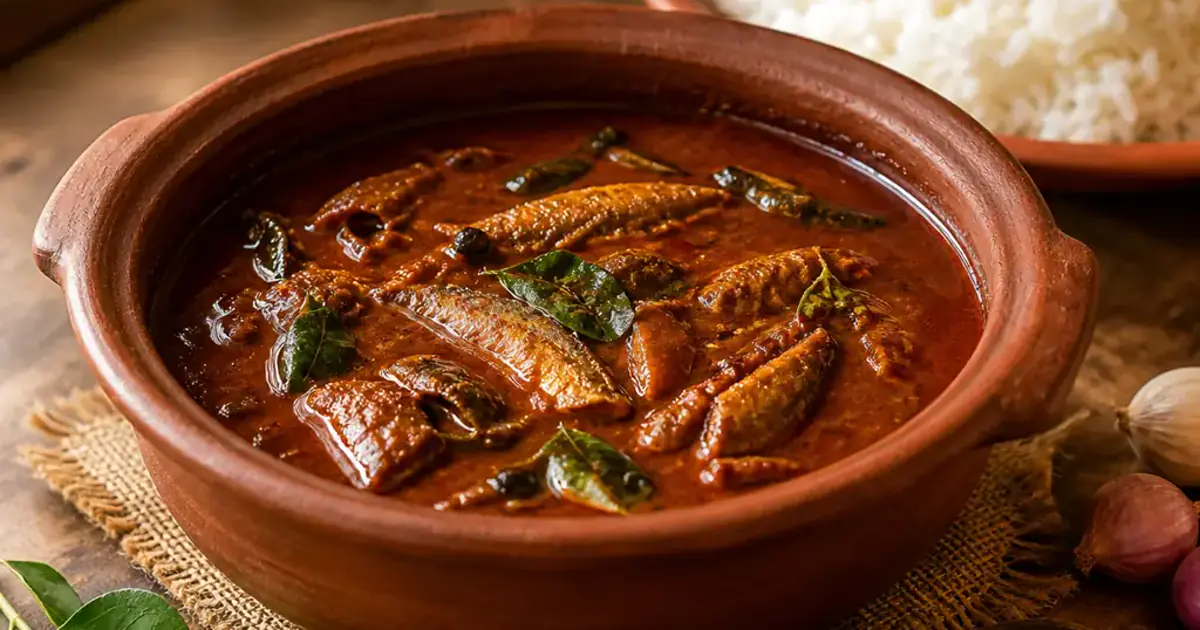
What Is Karuvadu Kuzhambu?
Karuvadu kuzhambu (also spelled karuvadu kulambu) is a Tamil-style tamarind gravy made with dried fish. The tang of tamarind balances the fish's savoury saltiness, while tomato, curry leaves, and spices build a deep coastal flavour. It is best served with hot rice and is often even better the next day.
This recipe uses a gentle simmer rather than aggressive stirring, so the dry fish absorbs the gravy without breaking apart.
Choosing Your Karuvadu
Panna Karuvadu (dried croaker) and Paarai Karuvadu (dried trevally) both hold up beautifully in a kuzhambu thanks to their firm flesh, while Vanjaram Karuvadu (dried king mackerel) makes a richer version for guests.
Ingredients
200g karuvadu of your choice, cleaned and cut into pieces • 1 lemon-sized ball of tamarind, soaked • 2 tbsp sesame or coconut oil • 1 tsp mustard seeds • A handful of curry leaves • 1 onion, finely chopped • 2 tomatoes, chopped • 1 tsp chilli powder • 1/2 tsp turmeric powder • 1 tsp coriander powder • Salt to taste (go easy, since karuvadu is already salted).
Method
Heat oil in a clay pot or heavy-bottomed pan. Add mustard seeds and let them splutter, then add curry leaves and chopped onion. Sauté until the onion turns translucent.
Add the chopped tomatoes and cook until soft. Stir in chilli powder, turmeric, and coriander powder, and cook for a minute until fragrant.
Extract the tamarind juice from the soaked pulp and add it to the pan along with a cup of water. Bring to a boil, then lower the heat and simmer for 8–10 minutes to let the raw tamarind smell cook off.
Gently add the karuvadu pieces and simmer for another 10–12 minutes, until the gravy thickens slightly and the fish has soaked up the flavour. Taste and adjust salt carefully — remember the fish itself is salted.
Serve hot with steamed rice. Like most kuzhambu, it tastes even better the next day, once the flavours have settled.