Natural Karuvadu vs Processed Dry Fish
Learn what distinguishes traditionally sun-dried Karuvadu from processed dry fish, and what to look for when choosing dried seafood for your kitchen.
2 min read
The Problem With Mass-Processed Dry Fish
To speed up drying and improve shelf appearance, some commercial dry fish is treated with chemical whiteners and preservatives. This can make the fish look more uniformly pale and last longer on a shelf — but it comes at the cost of natural flavour, texture, and, for many buyers, peace of mind about what they're eating.
How Traditional Sun-Drying Works
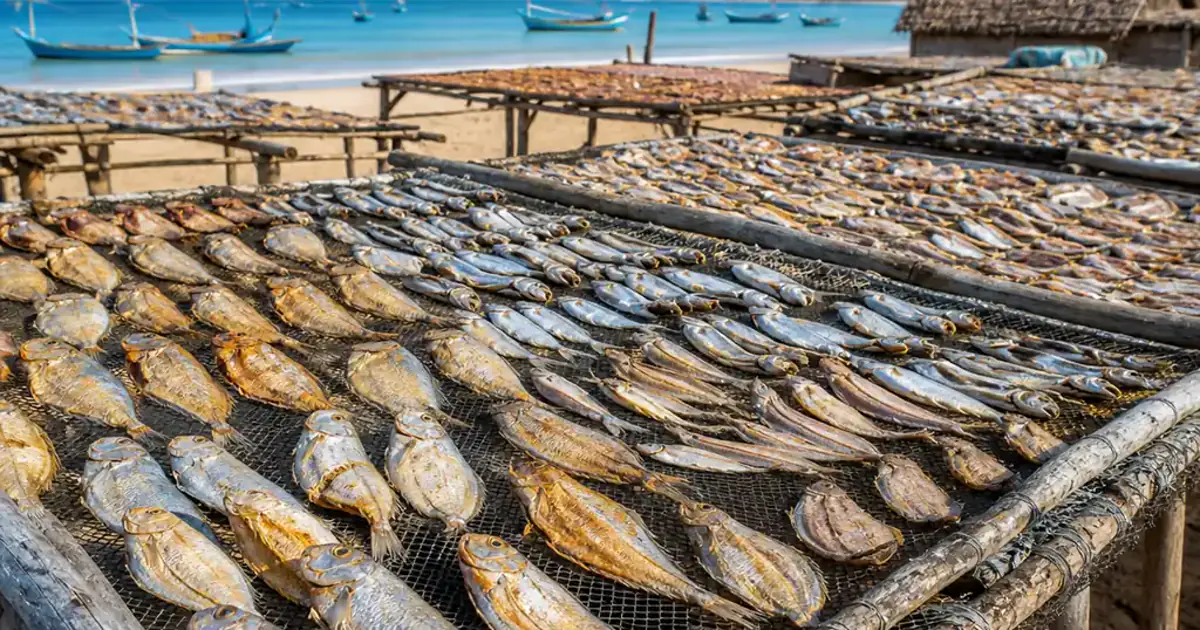
Traditional Karuvadu-making starts with fresh catch, cleaned and lightly salted before drying. The fish is laid out under the open Rameshwaram sun, where natural heat and airflow slowly draw out moisture over one to several days, depending on the fish and weather.
This slower, natural process preserves more of the fish's natural oils and flavour compounds, which is why traditionally dried karuvadu tastes noticeably different — more savoury, less flat — than chemically processed alternatives.
What to Look for When Buying Dry Fish
Unnaturally uniform white or bright colouring can be a sign of chemical whitening. Naturally sun-dried fish tends to have some natural colour variation and a duller, more matte appearance.
A strong ammonia-like or chemical smell (as opposed to a clean, salty sea smell) is another red flag.
Buying from a source that's transparent about their process — and ideally sources directly from local fishermen — is the most reliable way to know what you're getting.
Our Commitment
Every batch of Thenkadal Karuvadu is sun-dried the traditional way: fresh catch from local Rameshwaram fishermen, minimal sea salt, and natural sunlight — nothing else. It's the same process coastal families have relied on for generations, and it's why our customers keep coming back.